newlifeoutlookLupus
  • Medical Information
Symptoms

The Link Between Restless Legs Syndrome and Lupus

Nov 15, 2016

Do You Experience RLS With Lupus?

Restless legs syndrome (RLS) and autoimmune diseases, such as lupus, often occur together — however, the reason for this is not entirely clear.

RLS is a mysterious neurological condition that causes sensations like throbbing, creeping, and tingling, among others. These feelings occur most often while staying still, mostly while in bed at night.

The sensations lead to a strong impulse to move your legs to relieve them. And because this all typically happens at night, many people with lupus experience fatigue as a result.

So, on top of being unpleasant, RLS can actually make symptoms worse and exacerbate a lupus flare when it causes you to lose sleep. That’s why if you’re experiencing RLS you should see your doctor as soon as possible so you can receive treatment.

As of right now there is no cure for RLS, but with proper care it’s possible to relieve the sensations and keep the condition at bay.
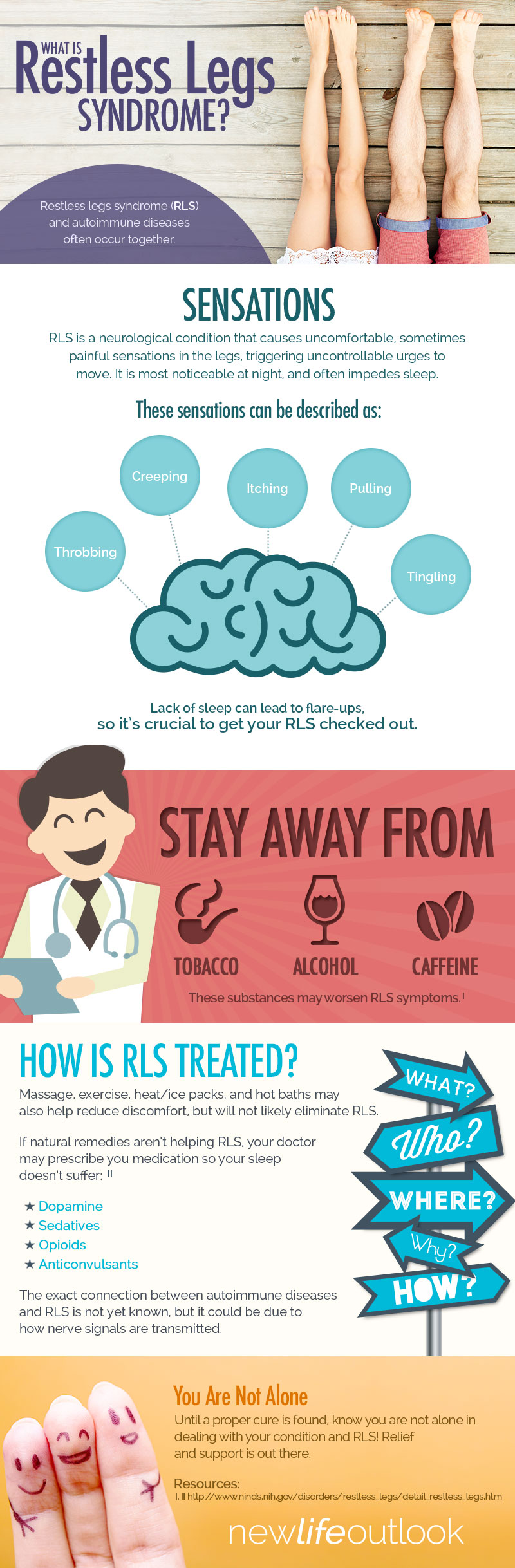
The Link Between Restless Legs Syndrome and Lupus
Embed this Infographic
You May Also Like:The Link Between Lupus and Nose Sores
Related Search Topics (Ads):
Print This
Symptoms

The Link Between Restless Legs Syndrome and Lupus

Nov 15, 2016
  • Medical Information
Print This

We all have a voice,what's your story?

We learn from each other. Share your story to let others with Lupus know they’re not alone.

Share Your Story

LupusNewsletter Sign-up

Stay up-to-date with all the latest news, articles, and updates from your community!

Subscribe Now

Join our privateLupus Facebook Group

to ask questions, get answers, and find support from fellow Lupus Warriors!

Join the Discussion
ConnectWithUs
  • Facebook
  • Twitter
  • Pinterest
  • About Us
  • Contact Us
  • Privacy Policy
  • For Advertisers
  • Terms of Use
  • Disclaimer
© 2025 NewLifeOutlook™ All rights reserved.
  • Contact Us
  • Privacy Policy
© 2025 NewLifeOutlook | Lupus
Close
Embed this image on your website or blog
Copy and paste the code below to use this infographic on your site.
Copy Code